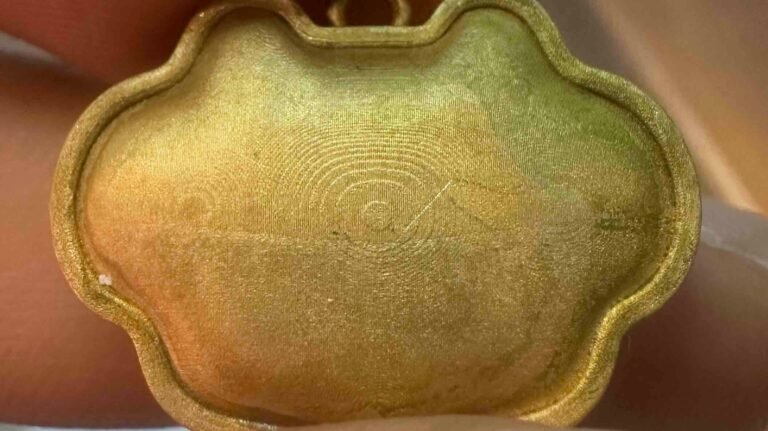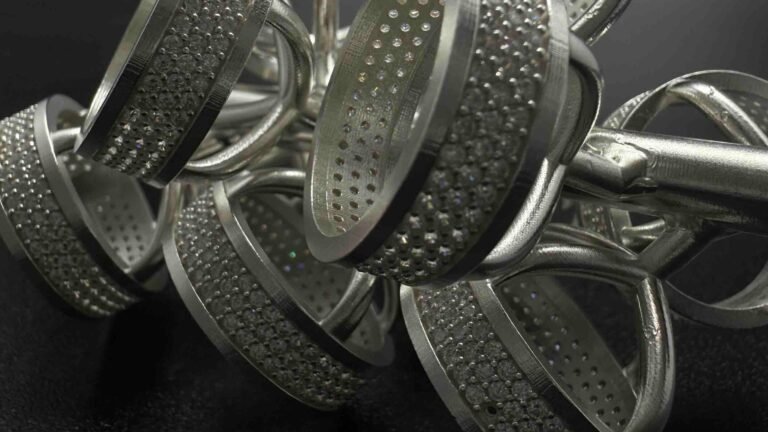
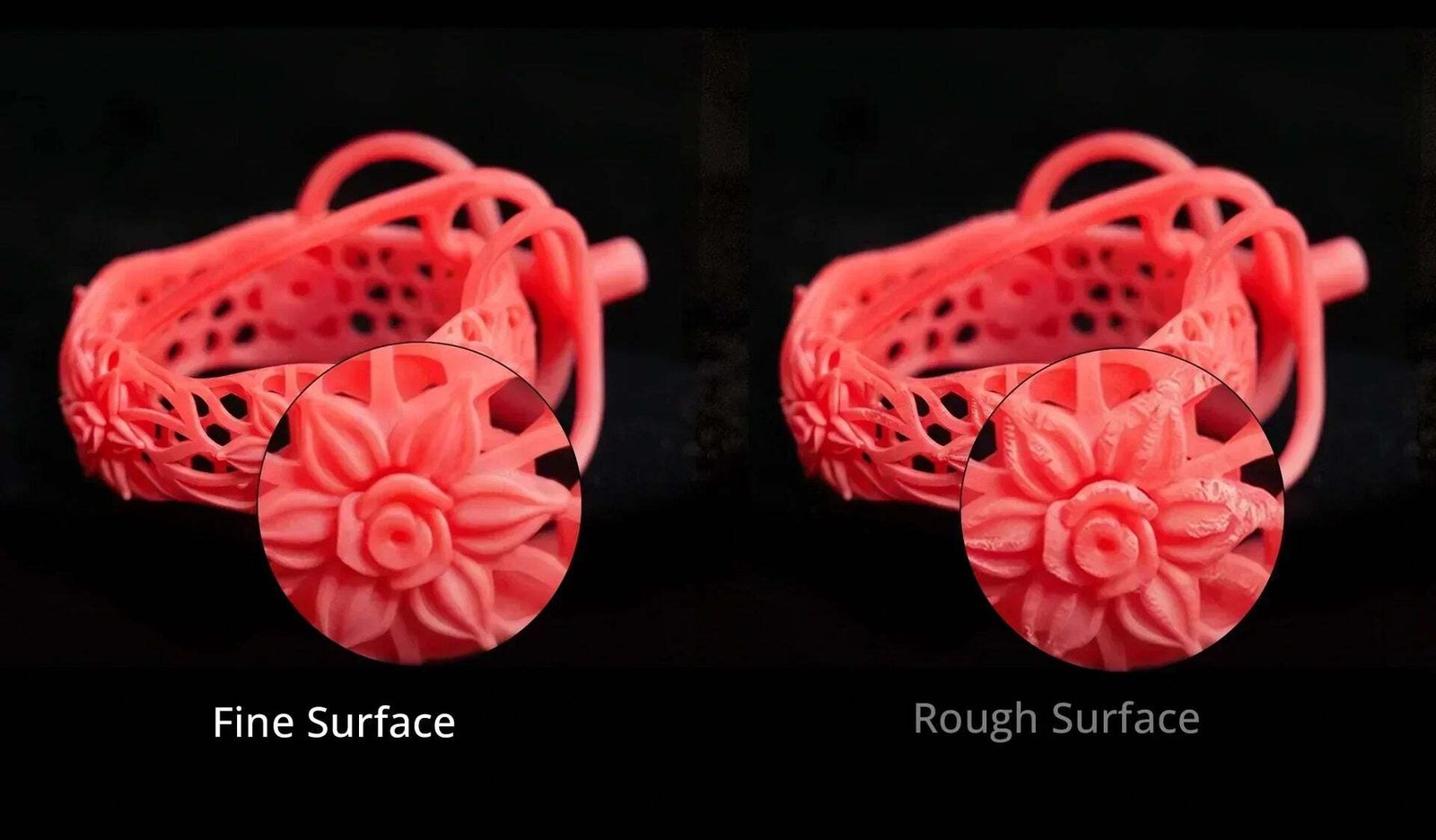
In industries such as jewelry manufacturing, precision casting, medical devices, and art reproduction, the quality of a wax pattern directly determines the success of the final cast product. Surface finish, dimensional accuracy, and fine-detail reproduction all play a crucial role in achieving reliable and high-quality results.
It is often assumed that a high-resolution 3D printer automatically guarantees smooth surfaces and perfect detail. However, in real-world WaxJet 3D printing, resolution alone is not enough to ensure superior wax pattern quality.
Even advanced systems with ultra-high DPI or 4K/8K capabilities may still produce issues such as:
- Rough or jagged edges
- Visible layer lines
- Dimensional variation
- Loss of fine details
- Streaking defects caused by nozzle issues
So what truly defines wax pattern quality?
The answer lies in the complete production ecosystem—process control, calibration accuracy, environmental stability, and long-term machine maintenance.
The Real Formula Behind Wax Pattern Quality
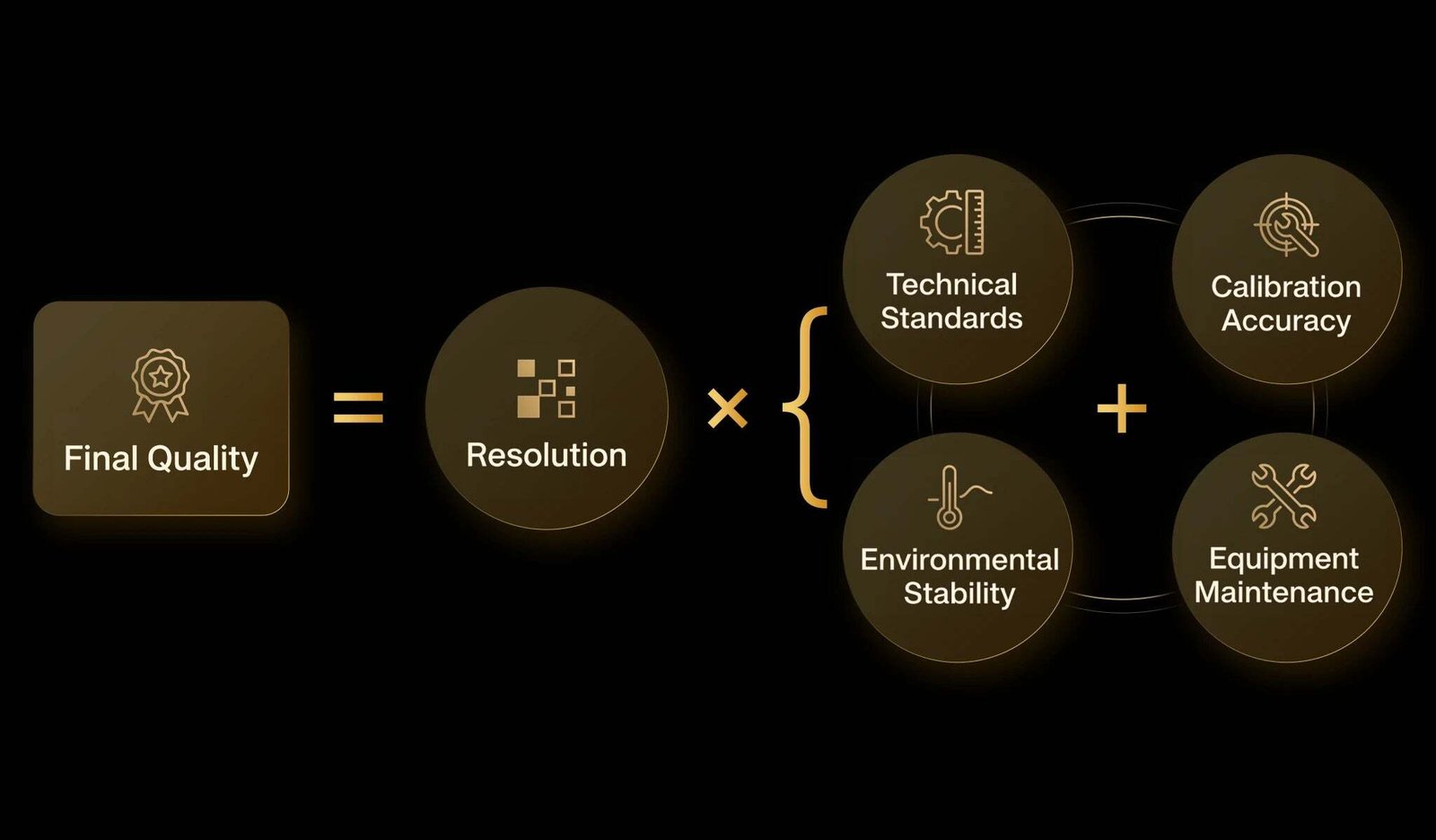
In industrial WaxJet printing, wax pattern quality can be understood through a simple but powerful relationship:
Final Quality = Resolution × (Calibration + Process Control + Environmental Stability + Maintenance)
While resolution defines the theoretical detail limit, actual output quality depends on how stable and controlled the entire printing system is.
Research in wax droplet formation shows that electrostatic forces and surface tension must remain in perfect balance. Any disturbance in this balance directly affects droplet size, placement accuracy, and surface consistency.
Why High Resolution Alone Is Not Enough
A common misconception in wax 3D printing is that hardware specifications determine final output quality. In practice, multiple process factors have a much greater impact.
1. Printhead and Wax Material Interaction
Wax behavior is highly sensitive to temperature changes.
Small variations can lead to significant print quality issues:
- Temperature fluctuation → unstable droplet formation → rough surface
- Partial nozzle clogging → inconsistent flow → streak defects
- Material inconsistency → uneven solidification → dimensional drift
Even a 1°C temperature variation can change wax viscosity by up to 5–10%, directly impacting droplet stability and surface finish.
This is why industrial WaxJet systems require precise thermal control and consistent wax material formulation.
2. Build Platform and Environmental Stability
Environmental conditions play a critical role in precision printing.
Key risks include:
- Improper leveling → stair-stepping and uneven layers
- Low ambient temperature → premature solidification
- Airflow disturbance → inaccurate droplet placement
A stable chamber environment ensures consistent layer bonding, improved dimensional accuracy, and better surface quality.
In industrial wax printing, even small environmental fluctuations can significantly reduce detail sharpness and surface uniformity.
3. Post-Processing and Casting Behavior
Wax pattern evaluation should never be limited to visual inspection alone—the entire casting workflow must be considered.
Common issues include:
- Poor support design leaving surface marks
- Improper storage causing micro-deformation
- Material mismatch leading to expansion issues during burnout
Many casting defects such as porosity, flow lines, or incomplete filling often originate from wax instability rather than the casting process itself.
Why Maintenance Directly Impacts Print Quality
In industrial WaxJet systems, consistent output is only possible with regular and structured maintenance.
A well-maintained system delivers:
- Smooth and uniform surface finishes
- Accurate fine-detail reproduction
- Stable layer formation
- Reliable casting compatibility
Without proper maintenance, common issues may include:
- Layer misalignment due to positioning errors
- Overspray from worn printheads
- Nozzle clogging from contamination
- Surface artifacts caused by mechanical wear
Long-term reliability depends as much on maintenance discipline as on machine capability.
4 Critical Factors for High-Quality WaxJet Printing
1. Precise Calibration
Calibration is not a one-time setup—it is a continuous requirement.
Key elements include:
- Printhead alignment accuracy
- Consistent nozzle-to-platform distance
- Stable X/Y/Z axis repeatability
Even a 0.1 mm misalignment can result in visible ghosting or edge defects.
Professional jewelry wax printing often requires:
- High XY precision (800–1000 DPI or more)
- Layer thickness between 15–25 microns
2. Stable Temperature Control
Wax materials are extremely sensitive to heat variations.
Stable systems ensure:
- Minimal printhead temperature fluctuation
- Uniform chamber temperature distribution
- Controlled wax viscosity during deposition
This stability is essential for consistent droplet formation and smooth surface quality.
3. High-Purity Wax Materials
Material quality is often underestimated in wax casting workflows.
High-quality wax must provide:
- Uniform melting behavior
- Clean burnout performance
- Zero ash residue
- Smooth flow through fine geometries
Impurities or additives in wax can lead to ash formation during burnout, causing surface defects such as pits, porosity, and incomplete casting.
4. Production Consistency
In industrial manufacturing, consistency is more important than a single perfect print.
Reliable production requires:
- Standard operating procedures (SOPs)
- Controlled environmental conditions
- Traceable maintenance logs
- Low variation in machine performance
In jewelry manufacturing, even minor dimensional inconsistencies across batches can lead to costly rework and delays.
A true industrial WaxJet system is defined not by one flawless print, but by its ability to reproduce the same quality—reliably and repeatedly—from the first wax pattern to the thousandth.
Key Takeaways
High-resolution specifications alone do not guarantee high-quality wax patterns.
True WaxJet print quality depends on the complete production system, including:
- Accurate calibration
- Stable thermal control
- High-quality wax materials
- Controlled environmental conditions
- Consistent maintenance practices
In industrial jewelry manufacturing and precision casting, process stability and repeatability are often far more important than resolution alone.