
Understanding Water Ripple Textures in Jewelry Wax 3D Printing
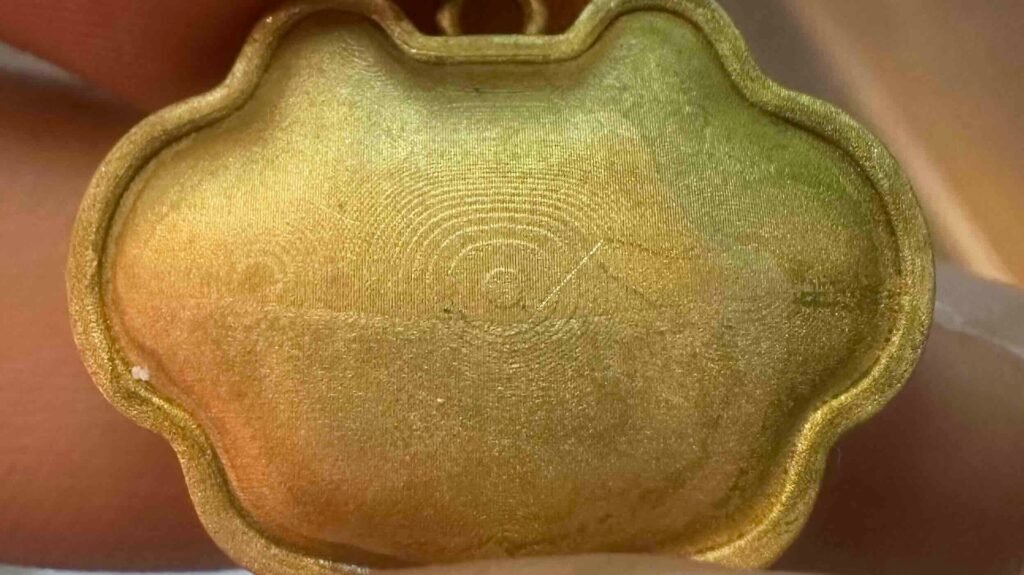
In jewelry wax 3D printing, one of the first things manufacturers notice under direct lighting is a clear difference in surface quality. Some wax patterns appear exceptionally smooth, while others show subtle wave-like textures that resemble water ripples. While such surface artifacts may be acceptable in general industrial parts, they are a serious concern in jewelry manufacturing. Even minor surface irregularities in wax patterns can impact the final metal casting—affecting polish quality, detail sharpness, and overall premium appearance. This is why reducing “water ripple” textures is considered one of the most important challenges in jewelry wax 3D printing. What Are Water Ripple Textures? Water ripple textures refer to repetitive surface patterns that appear due to accumulated microscopic deviations during the printing process. Unlike traditional molding, wax 3D printing builds models layer by layer through: Even small instabilities during these steps—such as vibration, motion deviation, inconsistent droplet placement, or path errors—gradually accumulate on the surface. Over time, these tiny variations form visible patterns such as: These effects are especially noticeable on jewelry models because of their small size and highly detailed curved geometry. Stair-Stepping Effect and Curved Surfaces Curved geometries such as rings, pendants, and spherical designs are particularly sensitive to ripple formation. This is due to the stair-stepping effect, where curved surfaces are approximated using stacked layers. The larger the layer thickness, the more visible the stepping becomes. Even in fine-resolution printing, minor inconsistencies can affect how light reflects off the final metal surface after casting. As a result, jewelry wax printing heavily depends on: For example, a 15 μm layer thickness can significantly improve surface smoothness and reduce visible transitions on curved jewelry models. Key Causes of Water Ripple Textures 1. Mechanical Vibration Mechanical vibration is one of the most common sources of surface ripple patterns. During high-speed printing, even small structural instabilities can lead to: These variations accumulate over time and become visible as periodic surface waves. Machines with lower rigidity or unstable motion systems tend to show more pronounced ripple effects, especially during fast or large-area printing. This is why modern WaxJet systems focus heavily on: 2. Printhead and Platform Motion Accuracy Surface quality also depends heavily on synchronization between: Even slight inconsistencies in speed, timing, or positioning can result in uneven droplet placement. These errors appear as: Curved surfaces amplify these issues because they continuously reflect light, making even small deviations more visible. 3. Sensitivity of Curved Geometry Curved jewelry surfaces are the most challenging to print smoothly. Common high-risk areas include: These shapes are built using continuous approximations of discrete layers. Any instability in motion, path planning, or layer deposition becomes highly visible. This is why surface quality evaluation in jewelry printing often focuses on ring outer surfaces—they reveal even the smallest printing imperfections. Why Polishing Cannot Fully Fix Ripple Textures A common misconception is that surface ripple textures can be corrected through polishing. However, in jewelry manufacturing, excessive post-processing creates new problems: Jewelry models often contain extremely delicate features that cannot withstand aggressive polishing. Because of this, modern manufacturing emphasizes achieving smooth surfaces directly during the printing stage rather than relying on corrective finishing. The Industry Shift: Quality at the Source High-end jewelry production now prioritizes: The goal is simple: eliminate ripple formation at the source instead of correcting it later. When wax patterns are produced with high stability, accurate calibration, and optimized motion control, manufacturers achieve: Conclusion Water ripple textures are not just a surface defect—they are a reflection of the entire printing system’s stability. They originate from a combination of: In jewelry wax 3D printing, true quality is defined not only by resolution, but by the ability to maintain smooth, consistent surfaces across complex geometries. Ultimately, the smoother the wax pattern, the more refined and premium the final jewelry piece becomes.
What Really Determines Wax Pattern Quality in Industrial WaxJet 3D Printing
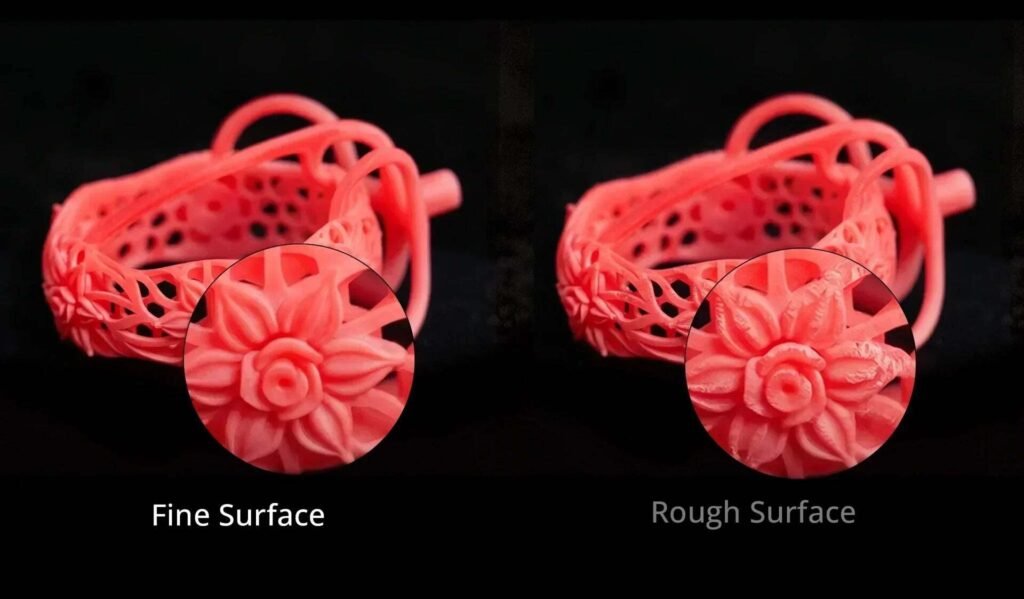
In industries such as jewelry manufacturing, precision casting, medical devices, and art reproduction, the quality of a wax pattern directly determines the success of the final cast product. Surface finish, dimensional accuracy, and fine-detail reproduction all play a crucial role in achieving reliable and high-quality results. It is often assumed that a high-resolution 3D printer automatically guarantees smooth surfaces and perfect detail. However, in real-world WaxJet 3D printing, resolution alone is not enough to ensure superior wax pattern quality. Even advanced systems with ultra-high DPI or 4K/8K capabilities may still produce issues such as: So what truly defines wax pattern quality? The answer lies in the complete production ecosystem—process control, calibration accuracy, environmental stability, and long-term machine maintenance. The Real Formula Behind Wax Pattern Quality In industrial WaxJet printing, wax pattern quality can be understood through a simple but powerful relationship: Final Quality = Resolution × (Calibration + Process Control + Environmental Stability + Maintenance) While resolution defines the theoretical detail limit, actual output quality depends on how stable and controlled the entire printing system is. Research in wax droplet formation shows that electrostatic forces and surface tension must remain in perfect balance. Any disturbance in this balance directly affects droplet size, placement accuracy, and surface consistency. Why High Resolution Alone Is Not Enough A common misconception in wax 3D printing is that hardware specifications determine final output quality. In practice, multiple process factors have a much greater impact. 1. Printhead and Wax Material Interaction Wax behavior is highly sensitive to temperature changes. Small variations can lead to significant print quality issues: Even a 1°C temperature variation can change wax viscosity by up to 5–10%, directly impacting droplet stability and surface finish. This is why industrial WaxJet systems require precise thermal control and consistent wax material formulation. 2. Build Platform and Environmental Stability Environmental conditions play a critical role in precision printing. Key risks include: A stable chamber environment ensures consistent layer bonding, improved dimensional accuracy, and better surface quality. In industrial wax printing, even small environmental fluctuations can significantly reduce detail sharpness and surface uniformity. 3. Post-Processing and Casting Behavior Wax pattern evaluation should never be limited to visual inspection alone—the entire casting workflow must be considered. Common issues include: Many casting defects such as porosity, flow lines, or incomplete filling often originate from wax instability rather than the casting process itself. Why Maintenance Directly Impacts Print Quality In industrial WaxJet systems, consistent output is only possible with regular and structured maintenance. A well-maintained system delivers: Without proper maintenance, common issues may include: Long-term reliability depends as much on maintenance discipline as on machine capability. 4 Critical Factors for High-Quality WaxJet Printing 1. Precise Calibration Calibration is not a one-time setup—it is a continuous requirement. Key elements include: Even a 0.1 mm misalignment can result in visible ghosting or edge defects. Professional jewelry wax printing often requires: 2. Stable Temperature Control Wax materials are extremely sensitive to heat variations. Stable systems ensure: This stability is essential for consistent droplet formation and smooth surface quality. 3. High-Purity Wax Materials Material quality is often underestimated in wax casting workflows. High-quality wax must provide: Impurities or additives in wax can lead to ash formation during burnout, causing surface defects such as pits, porosity, and incomplete casting. 4. Production Consistency In industrial manufacturing, consistency is more important than a single perfect print. Reliable production requires: In jewelry manufacturing, even minor dimensional inconsistencies across batches can lead to costly rework and delays. A true industrial WaxJet system is defined not by one flawless print, but by its ability to reproduce the same quality—reliably and repeatedly—from the first wax pattern to the thousandth. Key Takeaways High-resolution specifications alone do not guarantee high-quality wax patterns. True WaxJet print quality depends on the complete production system, including: In industrial jewelry manufacturing and precision casting, process stability and repeatability are often far more important than resolution alone.
Jewelry Stone Setting: Techniques, Types, and Its Role in Modern Jewelry Manufacturing
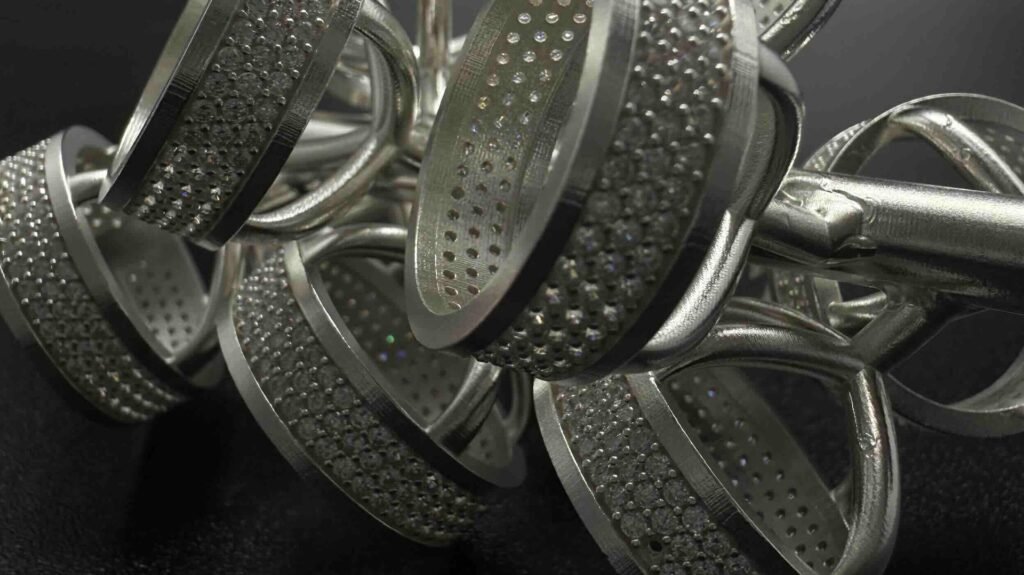
A beautiful gemstone is only as impressive as the way it is secured. In jewelry manufacturing, stone setting is one of the most important processes that transforms a raw metal casting into a finished, wearable piece. A well-executed setting not only secures gemstones in place but also enhances brilliance, visibility, and overall design appeal. Whether it is a solitaire engagement ring, a pavé diamond band, or a luxury pendant, the choice of stone setting directly influences durability, aesthetics, and manufacturing complexity. This guide explains what stone setting is, the major categories, and the most widely used setting techniques in modern jewelry production. What Is Jewelry Stone Setting? Jewelry stone setting is the process of securely fixing gemstones onto a metal structure. There are multiple ways to achieve this connection, including: Among these, mechanical stone setting is the most widely used in fine jewelry due to its strength, reliability, and long-term durability. Purpose of Stone Setting Stone setting serves two key functions: 1. Secure the gemstoneThe stone must remain firmly fixed during daily wear and resist impact or movement. 2. Enhance visual beautyA properly designed setting allows maximum light entry, improving brilliance, fire, and color performance. For this reason, stone setting is considered the point where engineering precision meets artistic craftsmanship. Main Categories of Jewelry Stone Setting Stone settings are generally classified in two main ways: by setting method and by stone arrangement. 1. Classification by Setting Method This classification is based on how the gemstone is physically secured within the metal structure. Prong Setting Prong setting is one of the most common techniques in jewelry manufacturing. Small metal claws hold the gemstone by its girdle while keeping most of the stone exposed. Advantages: Common Uses: Bezel Setting In bezel setting, a continuous metal rim surrounds the gemstone completely or partially. Advantages: Common Uses: Channel Setting Channel setting places gemstones between two parallel metal walls without individual prongs. Advantages: Common Uses: Pave Setting Pavé setting involves placing multiple small gemstones closely together, secured using tiny metal beads. Advantages: Common Uses: Pavé is one of the most skill-sensitive techniques, as even minor misalignment can affect overall visual consistency. Flush (Gypsy) Setting In flush setting, the gemstone is embedded directly into the metal surface, with its top nearly level with the surrounding material. Advantages: Common Uses: Micro Pave Setting Micro pavé is an advanced variation of pavé setting that uses extremely small stones placed under magnification. Advantages: This method requires extremely high precision and advanced manufacturing skills. Invisible Setting Invisible setting secures gemstones without visible metal support, creating a seamless surface appearance. Advantages: Challenges: Wax Setting Wax setting is a specialized technique used during casting production. In this method, gemstones are placed directly into the wax model before investment casting. During casting, the wax burns away while molten metal forms around the stone seats. Advantages: Wax setting is increasingly used in modern digital jewelry workflows, especially where wax models are produced using 3D printing and lost-wax casting techniques. 2. Classification by Stone Arrangement Stone settings can also be grouped based on how gemstones are arranged within a design. Solitaire Setting A solitaire setting features a single gemstone as the focal point of the design. Examples: Precision is critical because the entire design depends on one central stone. Multi-Stone Setting Multi-stone settings use multiple gemstones arranged in a structured design. Examples: These designs enhance brilliance and often create the illusion of larger gemstones. Why Stone Setting Matters in Jewelry Manufacturing Stone setting is not just a decorative step—it is a precision-driven manufacturing process. A high-quality setting must balance: Poor-quality settings can lead to: This is why skilled stone setters are essential in every professional jewelry manufacturing unit. The Role of Wax Models in Modern Stone Setting Modern jewelry production increasingly integrates digital design and manufacturing technologies. Today, many manufacturers use wax 3D printing to create precise jewelry patterns before casting. Accurate wax models enable: In digital jewelry workflows, the quality of stone setting often begins long before the gemstone is placed—it starts with the precision of the wax model itself. Conclusion Jewelry stone setting is both an art and a technical discipline. From traditional prong and bezel settings to advanced micro pavé and wax setting techniques, each method serves a specific purpose in jewelry design and manufacturing. Understanding these techniques helps designers, manufacturers, and buyers appreciate the craftsmanship behind every piece—and highlights the growing importance of precision wax modeling, casting, and digital production in modern jewelry making.